Dizziness · Ménière's Disease

What is Ménière's disease and how is it diagnosed and treated?

Ménière's disease is a condition where disrupted endolymphatic balance in the inner ear causes recurring vertigo attacks lasting 20 minutes to 12 hours, along with fluctuating hearing loss, tinnitus, and ear fullness in the affected ear. International criteria diagnose it based on attack characteristics and audiometry. As there is currently no cure, management focuses on reducing attacks and preserving hearing and daily functioning.

The inner ear is filled with fluid; when its balance is disrupted, dizziness, tinnitus, hearing loss, and ear fullness occur together. This condition is sometimes analogized to "hypertension of the ear" and is thought to arise from an interplay of genetics, immunity, blood vessels, inflammation, and stress.

International criteria (Bárány Society, 2015) classify cases with two or more vertigo attacks lasting 20 minutes to 12 hours, audiometrically confirmed low- to mid-frequency hearing loss in the affected ear, and fluctuating hearing, tinnitus, or fullness as "definite Ménière's disease." When audiometric confirmation is lacking or attacks last up to 24 hours, cases are broadly categorized as "probable Ménière's disease."

Evidence for pharmacological treatment remains limited. In a large randomized trial, there was no difference in attack frequency between groups taking betahistine and those taking a placebo. Consequently, American clinical guidelines set treatment goals on reducing vertigo attacks while preserving hearing and quality of life, selecting lifestyle modifications, medications, or procedures according to individual circumstances.

With what symptoms does Ménière's disease begin?

Vertigo attacks occurring regardless of posture

Spinning dizziness occurs in attacks without changes in posture, lasting from 20 minutes to several hours, and may be accompanied by nausea and vomiting.

Hearing loss, tinnitus, and fullness in one ear

Around the time of an attack, one ear feels full, tinnitus worsens, and low-frequency hearing repeatedly drops and recovers. In the early stages, ear symptoms may occur without vertigo.

Glossary of Terms Used in This Article

Ménière's Disease
A disease in which increased endolymphatic fluid in the inner ear (endolymphatic hydrops) causes recurrent vertigo attacks, hearing loss, tinnitus, and ear fullness
Endolymphatic hydrops
A condition where the endolymphatic fluid in the inner ear is greater than normal, causing swelling
Low-frequency hearing loss
Hearing loss in which low frequencies (around 250–1000 Hz) are hard to hear

What criteria and tests are used to diagnose Ménière's disease?

Diagnosis is made based on the clinical history of attack patterns and audiometry, so visiting the hospital during an active attack is not strictly necessary. However, hearing tests performed before and after an attack can be helpful.

Contrast-enhanced MRI to observe fluid retention in the inner ear is an auxiliary test used when the diagnosis is uncertain or other conditions must be ruled out; it is not established as necessary for all patients. Having ear fullness and tinnitus in one ear without vertigo attacks does not meet the diagnostic criteria for Ménière's disease.

How is Ménière's disease distinguished from sudden sensorineural hearing loss?

Ménière's disease is characterized by fluctuating low-frequency (250, 500, 1000 Hz) hearing loss and two or more recurrent vertigo attacks. Sudden sensorineural hearing loss is defined as a sudden hearing decrease of at least 30 dB across three contiguous frequencies.

If you experience sudden hearing loss, obtaining a prompt audiometry test is the top priority regardless of the cause. Ménière's disease and vestibular migraine also share overlapping symptoms and test findings, so considering multiple clinical findings and disease courses enhances diagnostic accuracy.

Is there evidence for oral medications and injection treatments in Ménière's disease?

In the BEMED trial, betahistine showed no difference in attack frequency compared to placebo in both high-dose (48 mg 3 times daily) and low-dose (24 mg 2 times daily) regimens, and a Cochrane review compiling multiple trials concluded that evidence quality was too low to judge effectiveness. The efficacy of diuretics is also not yet clear.

If oral medications fail to control attacks, intratympanic injections (steroids or gentamicin) or surgery are discussed. In a trial comparing the two injections, both significantly reduced attacks with no significant difference between them. However, evidence certainty remains low, and gentamicin carries a risk of hearing loss, requiring careful decision-making.

What lifestyle precautions should be taken for Ménière's disease?

A low-sodium diet (1,500–2,300 mg of sodium daily) is recommended, along with moderating alcohol, smoking, and caffeine, and avoiding attack triggers such as overwork, lack of sleep, and stress.

When attacks are frequent, keeping a log of attack dates, times, ear symptoms, sleep, diet, and stress levels helps clinicians evaluate the disease course.

How do definite Ménière's disease, probable Ménière's disease, and sudden sensorineural hearing loss differ?

CategoryVertigo / DizzinessHearingEar symptoms
Definite Ménière's diseaseTwo or more attacks lasting 20 minutes to 12 hoursAudiometrically confirmed low- to mid-frequency hearing loss in the affected earFluctuating hearing loss, tinnitus, and ear fullness
Probable Ménière's diseaseTwo or more attacks lasting 20 minutes to 24 hoursAudiometric confirmation not requiredFluctuating hearing loss, tinnitus, and ear fullness
Sudden sensorineural hearing lossAbsent or may co-occurSudden decrease of ≥30 dB across three contiguous frequenciesEar fullness and tinnitus may co-occur

Evidence: Bárány Society diagnostic criteria for Ménière's disease (Reference 1) · Ebian Korean Medicine Clinic clinical training materials

How does Ebian Korean Medicine Clinic treat Ménière's disease?

Ebian Korean Medicine Clinic does not view Ménière's disease as an isolated inner ear problem, but as part of an interconnected system involving the vestibular system, brain, neck (cervical spine), autonomic nervous system, and whole body. Treatment is based on Hwalcheong-tang, musk Gongjin-dan, and Hwalcheong external therapy tailored to symptoms and body conditions.

Hwalcheong-tang is prescribed according to patient subtypes: low vitality delaying ear recovery, fluid retention or phlegm-fluid stasis, internal organ imbalance causing recurrence, or autonomic sensitivity triggered by stress.

Phase 1 — Building bodily resilience for faster recovery during attacks

We aim to establish bodily conditions that enable faster recovery when an attack occurs.

Phase 2 — Reducing attack frequency and severity

We aim to decrease the frequency and intensity of vertigo attacks.

Phase 3 — Maintaining hearing without attacks

We aim to maintain hearing over a 2-year period without attacks.

Source: Ebian Korean Medicine Clinic clinical standards (Clinic response 2026-08-11 · Director training materials). Treatment goals represent clinical direction and do not guarantee results. Duration and response vary by individual and are determined through consultation after examination.

Evidence for This Page — Supported by Published Studies

01
International Diagnostic Criteria (Bárány Society)

Diagnostic criteria for Menière's disease

Lopez-Escamez JA et al. · Journal of Vestibular Research, 2015 · PMID 25882471 · DOI 10.3233/VES-150549

Definite Ménière's disease is diagnosed by two or more vertigo attacks lasting 20 minutes to 12 hours, confirmed low- to mid-frequency sensorineural hearing loss, and fluctuating ear symptoms, whereas probable Ménière's disease extends the attack duration window up to 24 hours.

02
Clinical Practice Guideline (American Academy of Otolaryngology–Head and Neck Surgery)

Clinical Practice Guideline: Ménière's Disease

Basura GJ et al. · Otolaryngology–Head and Neck Surgery, 2020 · PMID 32267799 · DOI 10.1177/0194599820909438

Set treatment goals on reducing vertigo attacks and preserving hearing and quality of life, selecting lifestyle management, medications, or procedures according to individual status.

03
Randomized controlled trial (multicenter)

Efficacy and safety of betahistine treatment in patients with Meniere's disease: primary results of a long term, multicentre, double blind, randomised, placebo controlled, dose defining trial (BEMED trial)

Adrion C et al. · BMJ, 2016 · PMID 26797774 · DOI 10.1136/bmj.h6816

Both high and low doses of betahistine showed no significant difference in attack frequency compared to placebo, with attack frequency decreasing across all groups including placebo.

04
Systematic Review (Cochrane)

Systemic pharmacological interventions for Ménière's disease

Webster KE et al. · Cochrane Database of Systematic Reviews, 2023 · PMID 36827524 · DOI 10.1002/14651858.CD015171.pub2

Concluded that the evidence for oral medications such as betahistine and diuretics is low, making it impossible to judge efficacy.

05
Systematic review

A Systematic Review of Diuretics in the Medical Management of Ménière's Disease

Crowson MG et al. · Otolaryngology–Head and Neck Surgery, 2016 · PMID 26932948 · DOI 10.1177/0194599816630733

A systematic review compiling 19 diuretic studies; 10 studies reported no adverse events, while 4 studies reported abdominal discomfort.

06
Randomized controlled trial

Intratympanic methylprednisolone versus gentamicin in patients with unilateral Ménière's disease: a randomised, double-blind, comparative effectiveness trial

Patel M et al. · Lancet, 2016 · PMID 27865535 · DOI 10.1016/S0140-6736(16)31461-1

Both intratympanic steroid and gentamicin injections significantly reduced attacks, with no significant difference between the two groups.

07
Systematic Review (Cochrane)

Intratympanic gentamicin for Ménière's disease

Webster KE et al. · Cochrane Database of Systematic Reviews, 2023 · PMID 36847592 · DOI 10.1002/14651858.CD015246.pub2

Noted that certainty of evidence for intratympanic gentamicin injections is low, and the risk of hearing loss must be weighed carefully.

08
Review Article

Meniere's disease

Nakashima T et al. · Nature Reviews Disease Primers, 2016 · PMID 27170253 · DOI 10.1038/nrdp.2016.28

A narrative review summarizing the diagnosis, pathogenesis, and treatment of Ménière's disease.

09
Review Article

Vestibular migraine or Meniere's disease: a diagnostic dilemma

Chen JY et al. · Journal of Neurology, 2023 · PMID 36562849 · DOI 10.1007/s00415-022-11532-x

Noted that Ménière's disease and vestibular migraine overlap significantly in symptoms and test findings, making differentiation difficult with a single test.

10
Systematic Review and Meta-Analysis

Efficacy and safety of acupuncture in the treatment of Meniere's disease: a systematic review and meta-analysis

Tang M et al. · Frontiers in Medicine, 2024 · PMID 39722819 · DOI 10.3389/fmed.2024.1463821

Reported that in Ménière's disease, the group combining acupuncture showed higher treatment response rates and pure-tone audiometry scores than the group using conventional medicine alone. Most included studies were conducted in China.

11
Survey study

Co-ingestion of herbal medicines and warfarin

Smith L et al. · British Journal of General Practice, 2004 · PMID 15186565

Reported that most people taking herbal supplements did not consult healthcare providers. It is safer to inform all involved healthcare teams about oral medications/supplements taken.

When to Seek Emergency/Neurology Care First

If dizziness occurs alongside slurred speech, double vision, limb weakness, or inability to stand unassisted, it may not be Ménière's disease. Go to the emergency room immediately. If sudden hearing loss occurs in one ear, obtain audiometry testing promptly; when severe vertigo co-occurs with neurological symptoms, Ebian Korean Medicine Clinic also recommends prior evaluation by otolaryngology or neurology.

Evidence: American Academy of Otolaryngology Ménière's disease clinical practice guideline (Reference 2) · Ebian Korean Medicine Clinic collaborative care standards (Clinic response)

Frequently Asked Questions (FAQ)

Is it Ménière's disease if there is only fullness and tinnitus in one ear?

Without vertigo attacks, it does not meet the diagnostic criteria for Ménière's disease. As ear fullness and tinnitus have various causes, audiometry should be performed first.

Is it not Ménière's disease if a vertigo attack lasts longer than 12 hours?

Definite Ménière's disease criteria define attack duration as 20 minutes to 12 hours, but probable Ménière's disease broadly extends this up to 24 hours. Severe dizziness persisting for over a day also warrants consideration of vestibular neuritis or other causes.

Do I need to visit the hospital during an attack to get diagnosed?

Diagnosis is based on attack history and audiometry, so visiting during an attack is not strictly necessary. However, audiometry performed before and after an attack can be helpful.

Does everyone undergo contrast-enhanced MRI?

It is not established as a necessary test for all patients. Its necessity is evaluated during clinical assessment when the diagnosis is uncertain or to exclude other disorders.

How do Ménière's disease and sudden sensorineural hearing loss differ?

Ménière's disease features fluctuating low-frequency hearing loss and two or more recurrent vertigo attacks. Sudden sensorineural hearing loss is defined by a sudden hearing drop of at least 30 dB across three contiguous frequencies.

How do Ménière's disease and vestibular migraine differ?

The two conditions share overlapping symptoms and test findings, making them difficult to differentiate with a single test; diagnostic accuracy increases when evaluating multiple clinical findings and disease courses together.

What are the goals of Ménière's disease treatment?

American clinical guidelines focus on reducing vertigo attacks, preserving hearing and auditory symptoms, and improving quality of life.

Is high-dose betahistine better than low-dose?

In the BEMED trial, both high dose (48 mg 3 times daily) and low dose (24 mg 2 times daily) showed no significant difference in attack frequency compared to placebo.

What side effects occur when taking diuretics?

Among 19 diuretic studies, 10 reported no adverse events, while 4 reported abdominal discomfort. Precautions vary depending on the specific diuretic, so consult your prescribing physician.

What treatments are available if oral medications do not work?

Intratympanic injections (steroids or gentamicin) or surgery are discussed. In a trial comparing both injections, both significantly reduced attacks with no difference between them, but gentamicin carries a risk of hearing loss and requires careful consideration.

How many intratympanic injections are administered?

In comparative trials, two injections were given 2 weeks apart, with additional injections administered if symptoms did not improve. The number of sessions depends on treatment response.

Is there a treatment that completely cures Ménière's disease?

As there is currently no definitive cure for Ménière's disease, management centers on controlling symptoms to reduce attacks and preserve daily life.

Should salt intake be reduced?

A low-sodium diet (1,500–2,300 mg of sodium daily) is recommended, alongside moderating alcohol, smoking, and caffeine, and avoiding trigger factors as core components of lifestyle management.

Are there studies on combining acupuncture for Ménière's disease?

A meta-analysis of randomized trials reported that the group combining acupuncture showed superior treatment response rates and pure-tone audiometry scores. Most included studies were conducted in China.

Can herbal medicine be taken together with prescription medications from other hospitals?

Surveys indicate that most people taking herbal remedies do not consult their healthcare providers. Please inform both healthcare teams about all oral medications and herbal remedies taken.

Where does Ebian Korean Medicine Clinic place the goals of Ménière's disease treatment?

We structure treatment goals into three phases: building bodily resilience for faster recovery during attacks, reducing attack frequency and intensity, and maintaining hearing without attacks over 2 years. These represent clinical directions and individual outcomes vary.


References

  1. Lopez-Escamez JA, et al. Diagnostic criteria for Menière's disease. Journal of Vestibular Research. 2015. PMID 25882471. DOI 10.3233/VES-150549.
  2. Basura GJ, et al. Clinical Practice Guideline: Ménière's Disease. Otolaryngology–Head and Neck Surgery. 2020. PMID 32267799. DOI 10.1177/0194599820909438.
  3. Adrion C, et al. Efficacy and safety of betahistine treatment in patients with Meniere's disease: primary results of a long term, multicentre, double blind, randomised, placebo controlled, dose defining trial (BEMED trial). BMJ. 2016. PMID 26797774. DOI 10.1136/bmj.h6816.
  4. Webster KE, et al. Systemic pharmacological interventions for Ménière's disease. Cochrane Database of Systematic Reviews. 2023. PMID 36827524. DOI 10.1002/14651858.CD015171.pub2.
  5. Crowson MG, et al. A Systematic Review of Diuretics in the Medical Management of Ménière's Disease. Otolaryngology–Head and Neck Surgery. 2016. PMID 26932948. DOI 10.1177/0194599816630733.
  6. Patel M, et al. Intratympanic methylprednisolone versus gentamicin in patients with unilateral Ménière's disease: a randomised, double-blind, comparative effectiveness trial. Lancet. 2016. PMID 27865535. DOI 10.1016/S0140-6736(16)31461-1.
  7. Webster KE, et al. Intratympanic gentamicin for Ménière's disease. Cochrane Database of Systematic Reviews. 2023. PMID 36847592. DOI 10.1002/14651858.CD015246.pub2.
  8. Nakashima T, et al. Meniere's disease. Nature Reviews Disease Primers. 2016. PMID 27170253. DOI 10.1038/nrdp.2016.28.
  9. Chen JY, et al. Vestibular migraine or Meniere's disease: a diagnostic dilemma. Journal of Neurology. 2023. PMID 36562849. DOI 10.1007/s00415-022-11532-x.
  10. Tang M, et al. Efficacy and safety of acupuncture in the treatment of Meniere's disease: a systematic review and meta-analysis. Frontiers in Medicine. 2024. PMID 39722819. DOI 10.3389/fmed.2024.1463821.
  11. Smith L, et al. Co-ingestion of herbal medicines and warfarin. British Journal of General Practice. 2004. PMID 15186565.

Ebian Korean Medicine Clinic Clinic Information

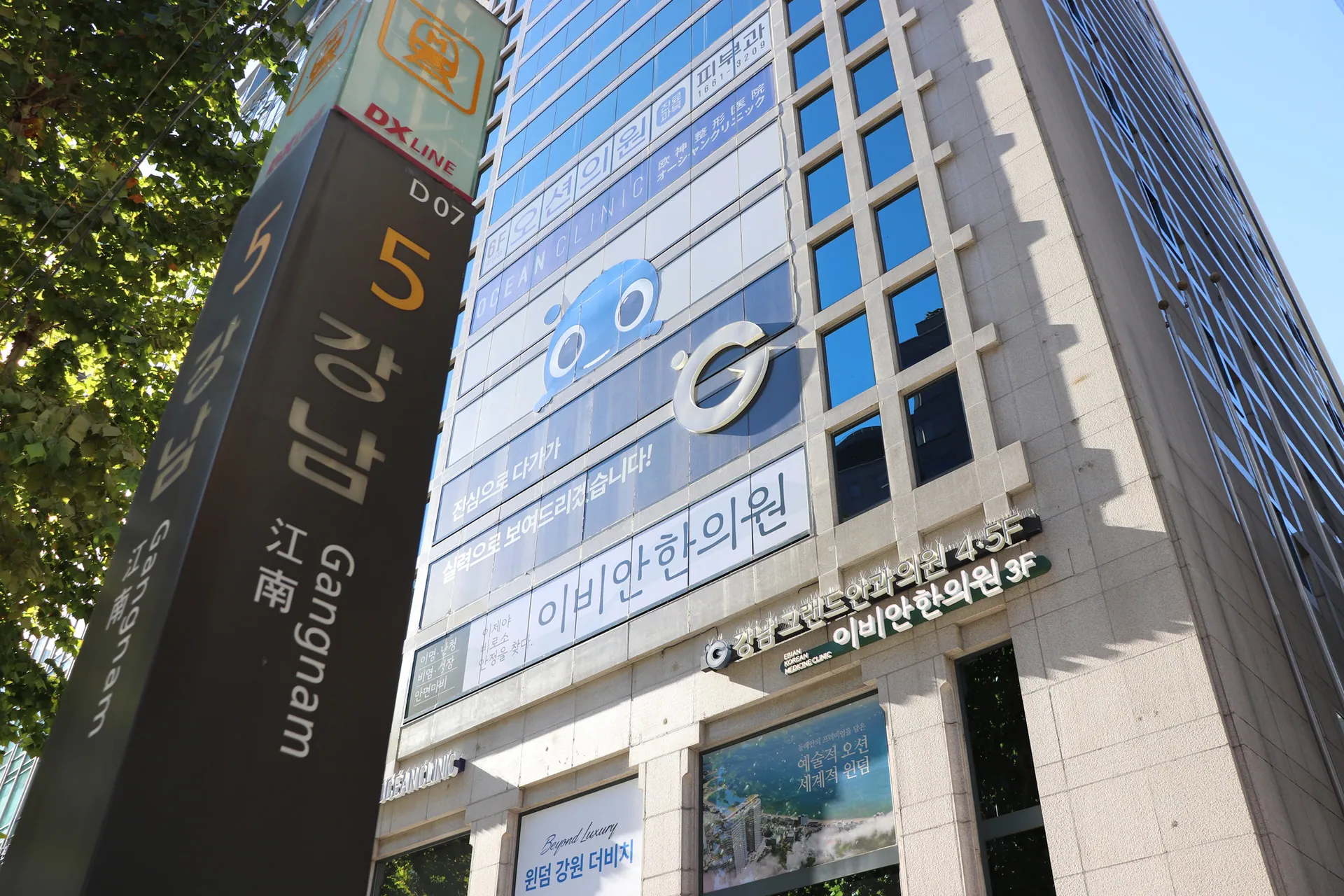
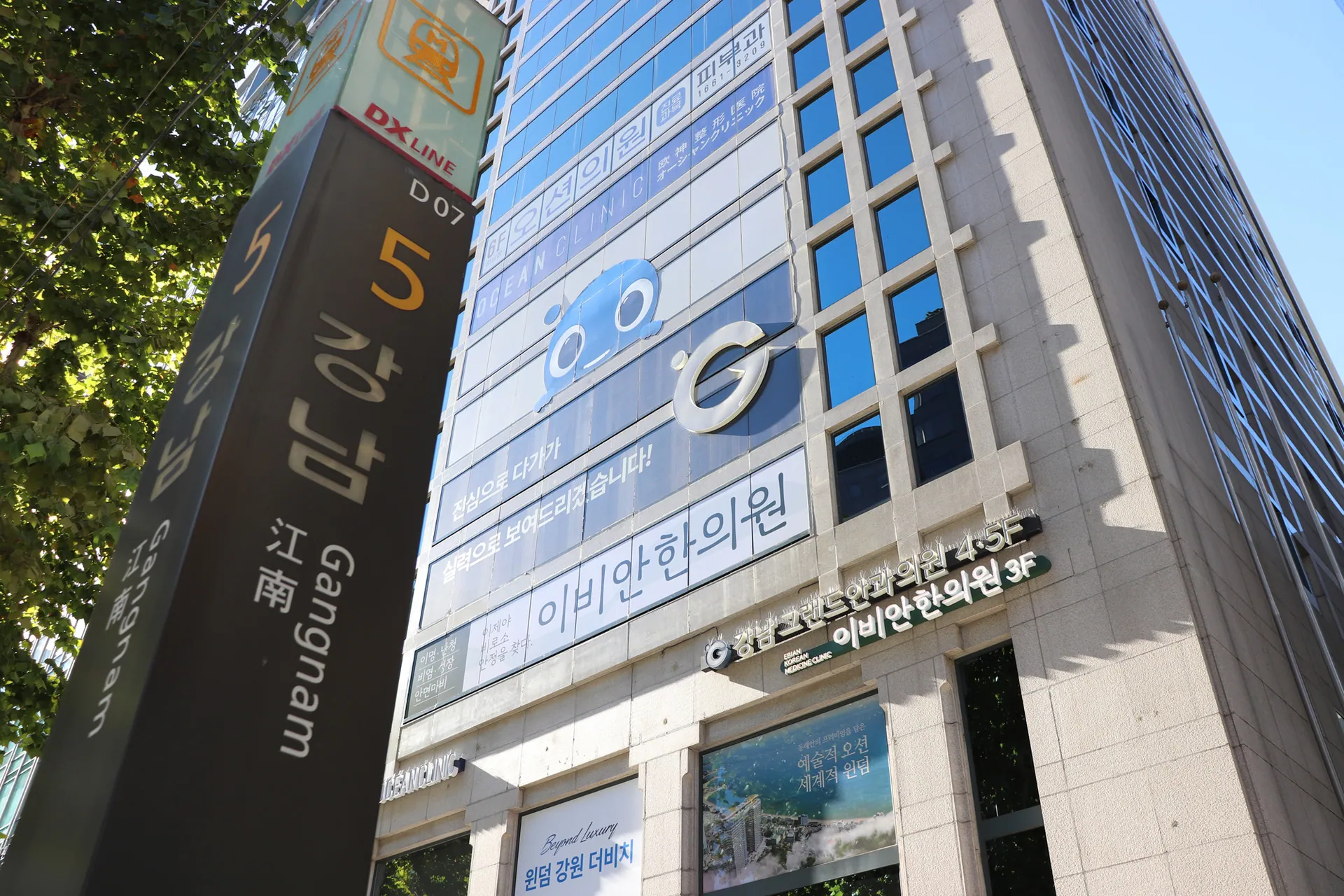
Located near Gangnam Station Exit 5, open 365 days a year, until 21:00 on weekdays. 3F, 363 Gangnam Tower, 363 Gangnam-daero, Seocho-gu, Seoul · +82-2-523-8080

This article provides health information summarizing medical research findings and Ebian Korean Medicine Clinic's clinical standards, and does not guarantee specific treatment outcomes. The cited statistics reflect research from external institutions and do not represent treatment success rates of Ebian Korean Medicine Clinic.

Acupuncture treatment may cause localized bruising (subcutaneous hemorrhage), temporary pain, stiffness, fatigue, or rarely dizziness depending on the individual. Herbal medicine may cause digestive discomfort, heartburn, diarrhea, itching, or rash in some individuals, and suitability depends on constitution or concurrent medications; please inform your practitioner in advance of any medications you are taking or if you are pregnant.

Treatment response and recovery vary individually. Please decide on symptoms and treatment options after thorough consultation with a Korean Medicine doctor. Avoid using saunas or public baths on the day of acupuncture treatment.

Last Updated

Third, we treat with an integrated approach
rather than a single method.

Tinnitus and hearing loss are complex conditions
that cannot improve with just a single treatment method.

Ebian Korean Medicine Clinic's prescription of Hwalcheong-tang to promote auditory nerve cell generation,
and awakening weakened auditory hair cells through

sound rehabilitation therapy combined with Hwalcheong external therapy to regenerate auditory nerves,
restoring hearing through an integrative approach.

Hours (Korea Standard Time, KST)
Weekdays09:00~21:00
Sat · Sun · Public Holidays09:00~16:00
Lunch Break12:30~14:00
Weekend & Holiday Lunch Break12:00~13:00

3F, 363 Gangnam-daero, Seocho-gu, Seoul (Seocho-dong)

(Gangnam Station, Exit 5)

Representative: Yeeun Min | Business name: Ebian Korean Medicine Clinic | Business registration no.: 448-92-00624

Main line: +82-2-523-8080 | Fax: +82-2-2651-8089 | Email: purun1888@naver.com

24/7 consultation — AI chat in your language · phone (Korean)

Privacy Policy     Non-Covered Medical Costs (Korean)

Hours (Korea Standard Time, KST)
Weekdays9:00~21:00
Sat · Sun · Public Holidays09:00~16:00
Lunch Break12:30~14:00
Weekend & Holiday Lunch Break12:00~13:00

3F, 363 Gangnam-daero, Seocho-gu, Seoul (Seocho-dong) (Gangnam Station, Exit 5)

Representative: Yeeun Min | Business name: Ebian Korean Medicine Clinic | Business registration no.: 448-92-00624

Main line: +82-2-523-8080 | Fax: +82-2-2651-8089 | Email: purun1888@naver.com Copyright ⓒ Ebian Korean Medicine Clinic All rights reserved.

24/7 consultation — AI chat in your language · phone (Korean)