


Facial Palsy Care
Facial palsy can be a lonely and difficult struggle.
We will stay with you until you can smile again.
Facial Palsy Care
Facial palsy can be a lonely and difficult struggle.
We will stay with you until you can smile again.
Facial Palsy Care
Facial palsy can be a lonely and difficult struggle.
We will stay with you until you can smile again
Facial palsy refers to paralysis on one side of the face or a crooked mouth caused by damage to the facial nerve pathway.
The facial nerve is a mixed nerve in which motor and sensory nerves work together, and it is made up of about 7,000 nerve fibers.
Facial palsy occurs when the path of the facial nerve is damaged and the surrounding tissue weakens, so nerve signals no longer flow smoothly.
A damaged facial nerve pathway can recover more quickly when nerve regeneration is strong.
However, when factors such as lack of sleep, overwork, stress, diabetes, circulation problems, and lowered immunity
reduce nerve regeneration, the facial nerve signaling system is disrupted and facial palsy symptoms appear.
For this reason, care for facial palsy looks for why nerve-repairing cells are not being produced well
and aims to support the body's own capacity for nerve regeneration.
Rather than relying on short-term medication alone, care aims to help the facial nerve signaling system work normally again.
We check the state of the facial nerve signaling system with tests and provide acupuncture, pharmacopuncture, and Korean herbal medicine.
When the facial nerve pathway is damaged for any reason, care focuses on promptly supporting the repair of damaged nerve tissue,
helping prevent nerve degeneration, and encouraging the formation of nerve-repairing cells.
Facial palsy refers to paralysis on one side of the face or a crooked mouth caused by damage to the facial nerve pathway.
The facial nerve is a mixed nerve in which motor and sensory nerves work together, and it is made up of about 7,000 nerve fibers.
Facial palsy occurs when the path of the facial nerve is damaged and the surrounding tissue weakens, so nerve signals no longer flow smoothly.
A damaged facial nerve pathway can recover more quickly when nerve regeneration is strong.
However, when factors such as lack of sleep, overwork, stress, diabetes, circulation problems, and lowered immunity
reduce nerve regeneration, the facial nerve signaling system is disrupted and facial palsy symptoms appear.
For this reason, care for facial palsy looks for why nerve-repairing cells are not being produced well
and aims to support the body's own capacity for nerve regeneration.
Rather than relying on short-term medication alone, care aims to help the facial nerve signaling system work normally again.
We check the state of the facial nerve signaling system with tests and provide acupuncture, pharmacopuncture, and Korean herbal medicine.
When the facial nerve pathway is damaged for any reason, care focuses on promptly supporting the repair of damaged nerve tissue,
helping prevent nerve degeneration, and encouraging the formation of nerve-repairing cells.




The early window is within 4–7 days of onset: we explain the timing of early care
In Korean Medicine, the early window for facial palsy care is within 4–7 days of onset.
How quickly treatment begins can make a meaningful difference.
The earlier treatment begins, the less often lingering effects of facial palsy develop.
In the United States, acupuncture is also considered for patients with facial palsy symptoms.
Facial palsy outcomes by timing of acupuncture and moxibustion treatment (published study)
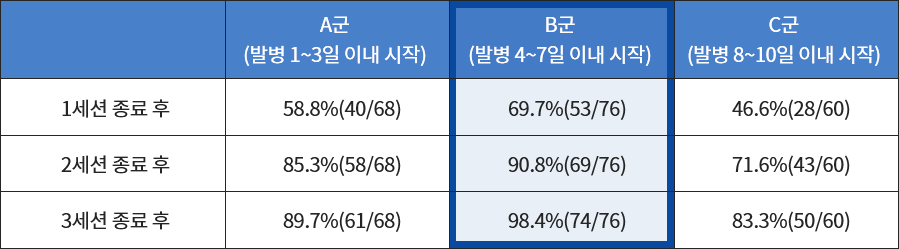
The early window is within 4–7 days of onset: we explain the timing of early care
In Korean Medicine, the early window for facial palsy care is within 4–7 days of onset.
How quickly treatment begins can make a meaningful difference.
The earlier treatment begins, the less often lingering effects of facial palsy develop.
In the United States, acupuncture is also considered for patients with facial palsy symptoms.
Facial palsy outcomes by timing of acupuncture and moxibustion treatment (published study)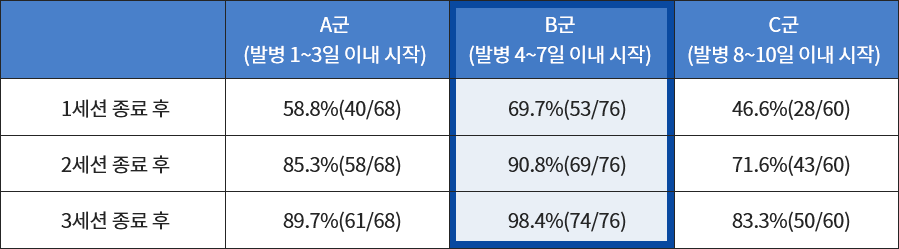
Source: Effect of acupuncture and moxibustion on treatment outcomes of peripheral facial palsy
Feng L, Ma WZ, Impacts on the curative effect of peripheral facial paralysis treated with acupuncture and
moxibustion at different times. Zhongguo Zhen Jiu. 2013 Dec:33(12):1085-7

Facial palsy is divided into 5 stages over time, and each stage calls for a different approach.
Facial palsy is divided into 5 stages over time, and each stage calls for a different approach.
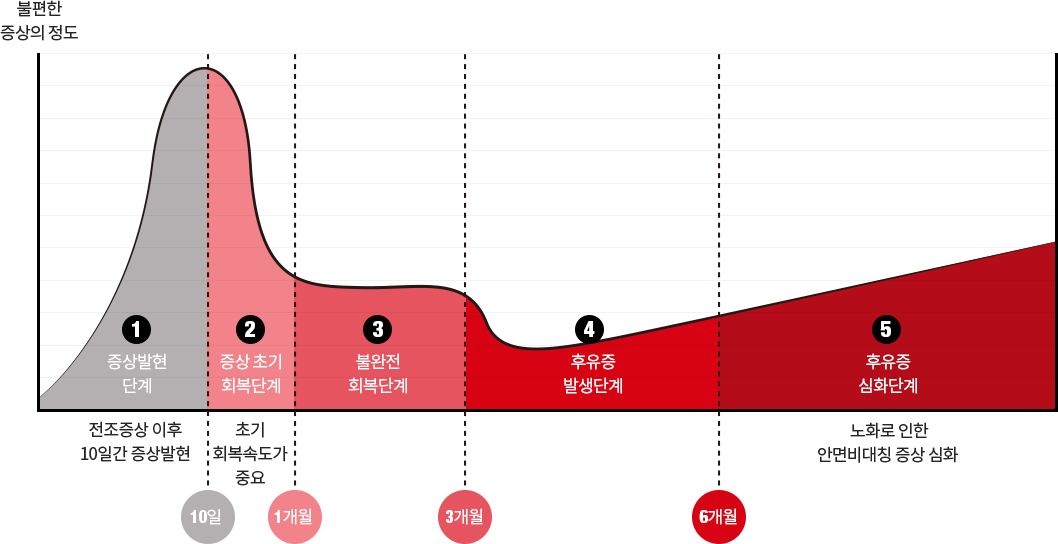
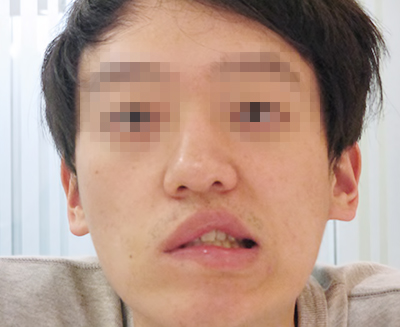
Stage 1: Prodromal stage (within 10 days of onset)
A few days before facial palsy develops, your body may feel heavy as if you are coming down with a cold,
and there may be warning signs such as stiffness and pain in the back of the neck or below one ear.
This is the stage when the main symptoms begin to appear. Over time, the mouth becomes crooked
and the forehead on the affected side can no longer wrinkle as the condition moves into early facial palsy.
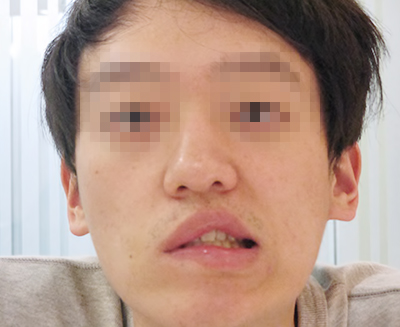
Stage 1: Prodromal stage (within 10 days of onset)
A few days before facial palsy develops,
your body may feel heavy as if you are coming down with a cold,
and there may be warning signs such as stiffness and pain in the back of the neck or below one ear.
This is the stage when the main symptoms begin to appear. Over time, the mouth becomes crooked and the forehead on the affected side can no longer wrinkle as the condition moves into early facial palsy.
Stage 2: Early facial palsy (up to 1 month after onset)
The main symptoms appear: you cannot make facial expressions properly, the eye does not close, and the mouth droops
or becomes crooked. These symptoms make normal social life difficult
and make everyday tasks such as eating and brushing your teeth harder.
Because damage to the facial nerve pathway and tissue accelerates over time,
the key early on is to reduce inflammation and swelling and provide focused care to slow its progression.
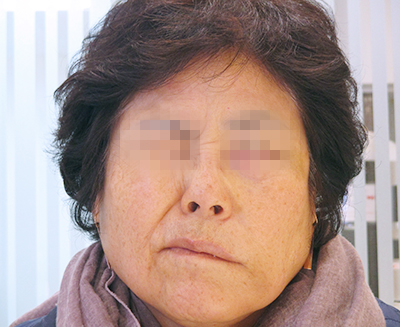
Stage 2: Early facial palsy (up to 1 month after onset)
You cannot make facial expressions properly,
the eye does not close, and the mouth droops
or becomes crooked—these are the main symptoms.
These symptoms make normal social life difficult
and make everyday tasks such as eating and brushing your teeth harder.
Because damage to the facial nerve pathway and tissue accelerates over time,
the key early on is to reduce inflammation and swelling and provide focused care to slow its progression.
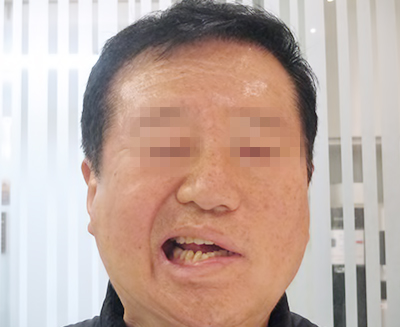
Stage 3: Incomplete recovery (1 to 3 months after onset)
Prompt care for inflammation, swelling, and damage in the facial nerve pathway
has partly restored the facial nerve signaling system, but the crooked mouth has not fully returned to its previous state
and symptoms remain. Because the facial nerve recovers more slowly over time,
it is important to support normal facial nerve signaling while encouraging recovery of facial muscle movement
to help prevent lingering effects such as stiffening and fibrosis of the facial muscles.
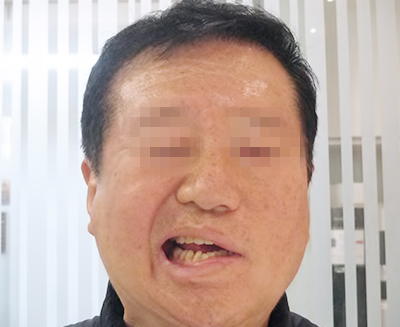
Stage 3: Incomplete recovery (1 to 3 months after onset)
Prompt care for inflammation, swelling, and damage in the facial nerve pathway
has partly restored the facial nerve signaling system, but the crooked mouth has not fully returned to its previous state
and symptoms remain. Because the facial nerve recovers more slowly over time, it is important to support normal facial nerve signaling while encouraging recovery of facial muscle movement
to help prevent lingering effects such as stiffening and fibrosis of the facial muscles.
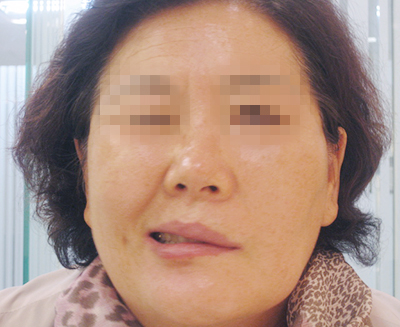
Stage 4: Onset of lingering effects (3 to 6 months after onset)
If facial palsy is not addressed early, the face may not return to normal and the facial muscles can weaken,
entering the stage of lingering effects. Typical lingering effects include facial asymmetry, facial spasms (around the eyelids and cheekbones),
synkinesis (the eye and mouth moving together), and crocodile tears (excessive tearing while eating).
Because the facial nerve recovers more slowly over time,
the same intensity of care used for early facial palsy may not bring easy recovery.
This is why care for lingering effects must be approached differently from early facial palsy.
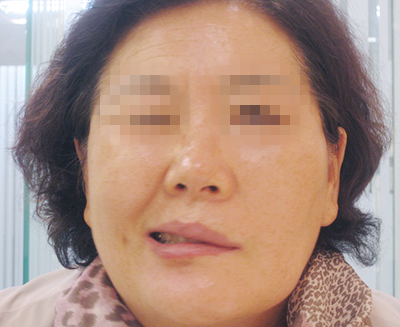
Stage 4: Onset of lingering effects (3 to 6 months after onset)
If facial palsy is not addressed early, the face may not return to normal and the facial muscles can weaken,
entering the stage of lingering effects. Typical lingering effects include facial asymmetry, facial spasms (around the eyelids and cheekbones), synkinesis (the eye and mouth moving together), and crocodile tears (excessive tearing while eating).
Because the facial nerve recovers more slowly over time, the same intensity of care used for early facial palsy may not bring easy recovery.
This is why care for lingering effects must be approached differently from early facial palsy.
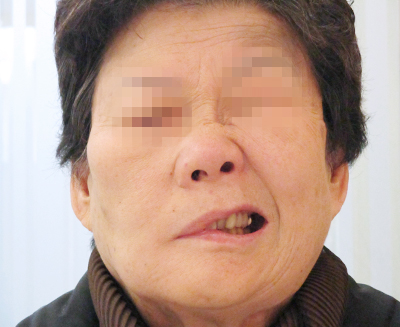
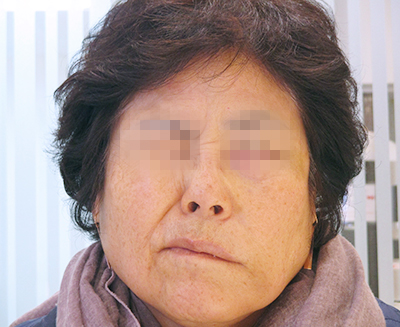
Stage 5: Advanced lingering effects (more than 6 months after onset)
From about 6 months after onset, facial palsy moves into the stage of advanced lingering effects.
The facial nerve pathway regenerates slowly, and the regenerating nerve branches are weak and thin,
so they do not carry facial nerve signals well. Even when the facial nerve has partly recovered through treatment,
abnormal changes such as nerve branches reconnecting incorrectly can leave significant lingering effects.
In addition, weakened facial muscles become stiff, making it difficult to return to how the face looked before facial palsy.
At this stage, care aims not simply to support facial nerve cells but to strengthen the activity of weakened internal organs
so that immune and repair cells throughout the body are actively produced.
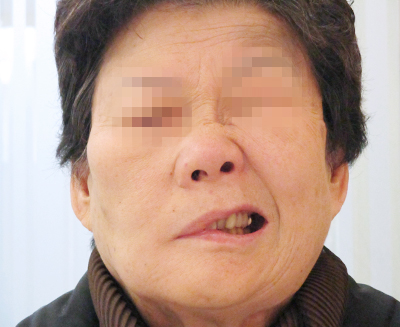
Stage 5: Advanced lingering effects (more than 6 months after onset)
From about 6 months after onset, facial palsy moves into the stage of advanced lingering effects.
The facial nerve pathway regenerates slowly, and the regenerating nerve branches are weak and thin, so they do not carry facial nerve signals well. Even when the facial nerve has partly recovered through treatment,
abnormal changes such as nerve branches reconnecting incorrectly can leave significant lingering effects.
In addition, weakened facial muscles become stiff, making it difficult to return to how the face looked before facial palsy.
At this stage, care aims not simply to support facial nerve cells but to strengthen the activity of weakened internal organs so that immune and repair cells throughout the body are actively produced.
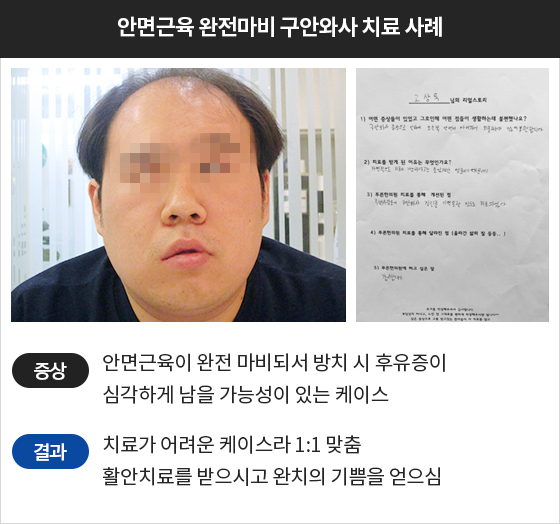
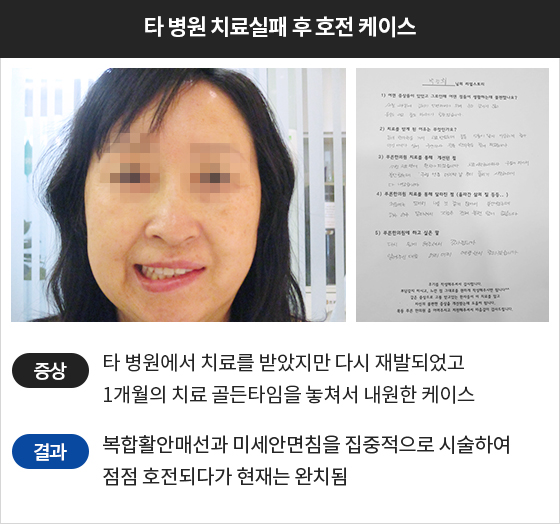
For recovery of the facial nerve pathway:
our step-by-step facial palsy care

Facial palsy arises from a problem in the
signaling system of the facial nerve pathway. The facial nerve regenerates, though slowly.
We look at the condition of the paralyzed facial muscles and nerve system and provide care.
Ebian Korean Medicine Clinic has developed its own integrated approach to supporting recovery of a damaged facial nerve pathway.
Rather than treating only the visible symptoms of facial palsy, we care for the whole body, combining internal and external treatments.
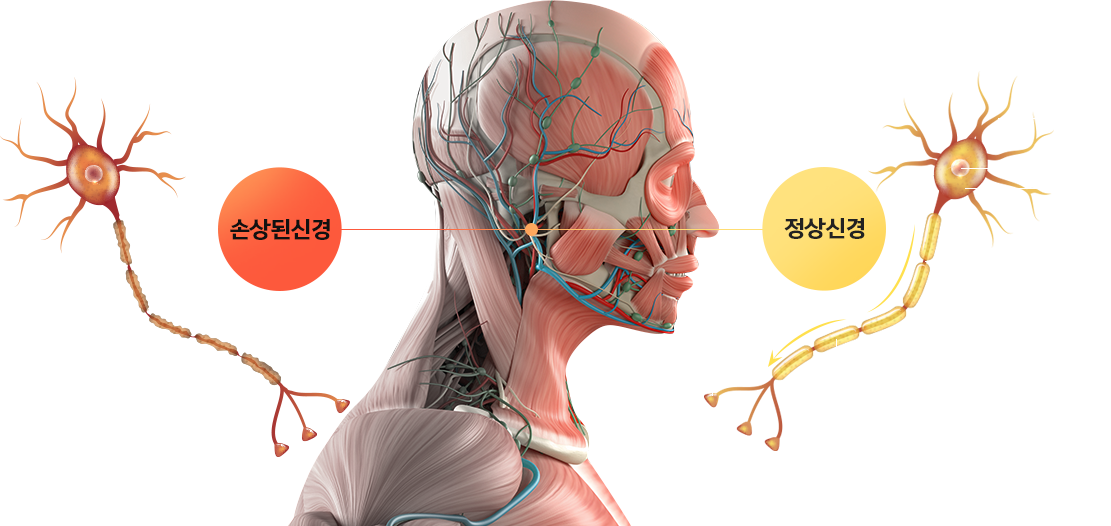
Our step-by-step facial palsy care for recovery of the facial nerve pathway

Facial palsy arises from a problem in the signaling system of the facial nerve pathway. The facial nerve regenerates, though slowly.
We look at the condition of the paralyzed facial muscles and nerve system and provide care.
Ebian Korean Medicine Clinic has developed its own integrated approach to supporting recovery of a damaged facial nerve pathway.
Rather than treating only the visible symptoms of facial palsy, we care for the whole body, combining internal and external treatments.
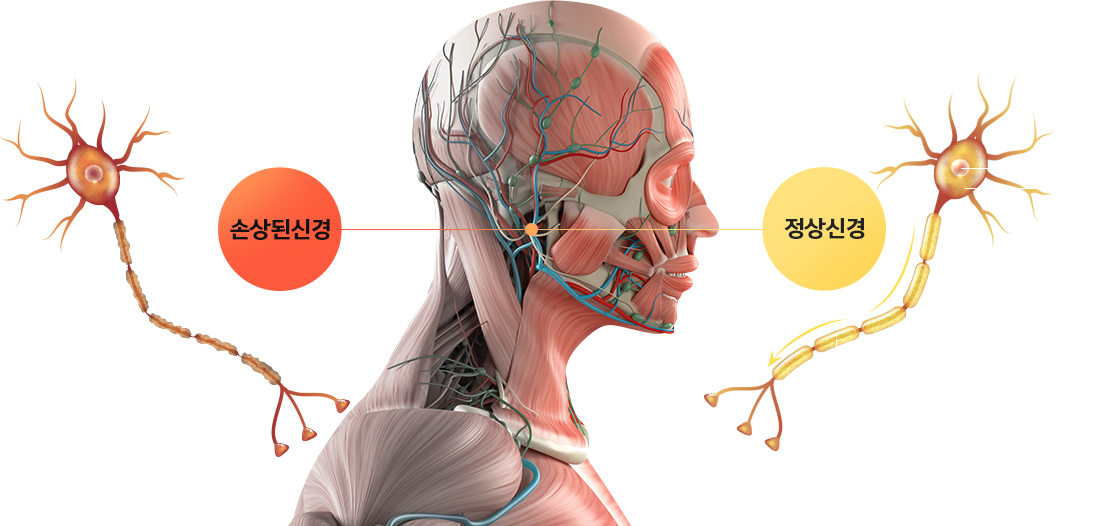
Korean herbal medicine for facial palsy
An herbal prescription intended to support facial nerve recovery
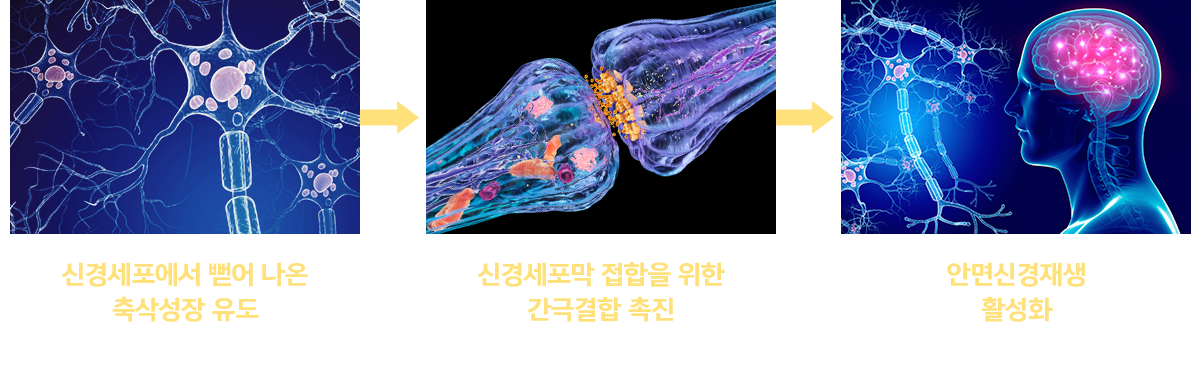
Our herbal prescription for facial palsy was developed from Ebian Korean Medicine Clinic's clinical experience with facial palsy and is intended to support facial nerve recovery.
It is intended to help axons extending from nerve cells grow in the right direction and to support gap junctions so that connections between nerve cells form well.
It is not a short-term medication that only reduces swelling and inflammation of the facial nerve.
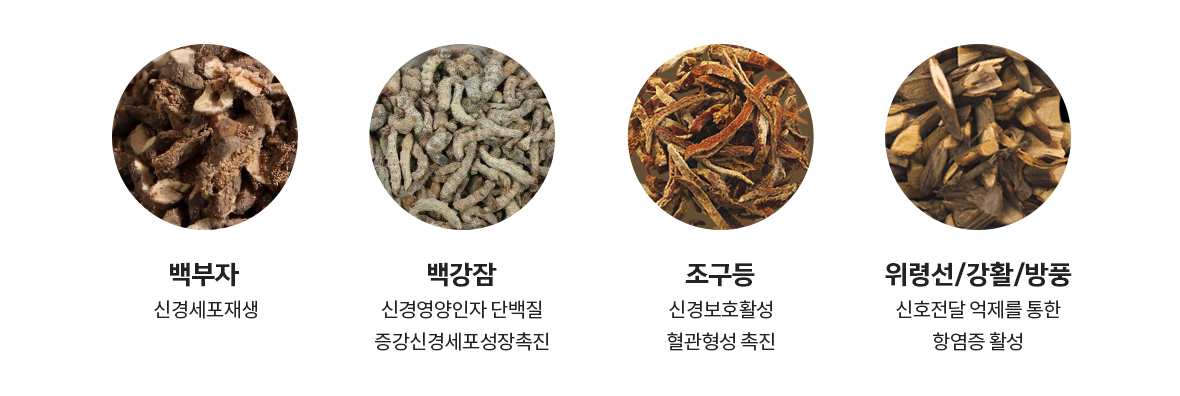
Ingredients such as Typhonium tuber (Baekbuja), silkworm (Baekgangjam), Uncaria hook, Clematis root, Notopterygium root, and Saposhnikovia root are used, and the formula is tailored to each patient's condition.
Herbs that support the function of each patient's weaker internal organs are also added to strengthen organ activity at the same time.
This herbal medicine is prescribed after examining the condition of the facial nerve, and responses vary from person to person.
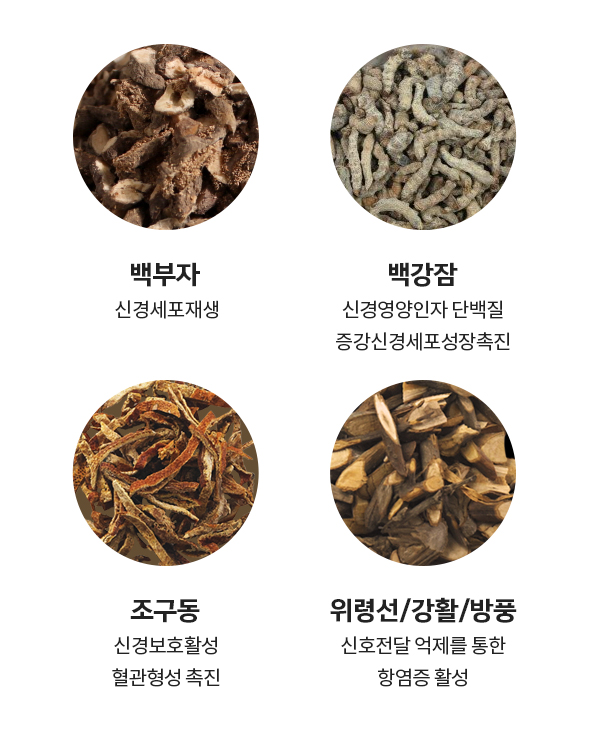
Korean herbal medicine for nerve recovery
A customized herbal prescription intended to support recovery of paralyzed nerves and healing of body tissues
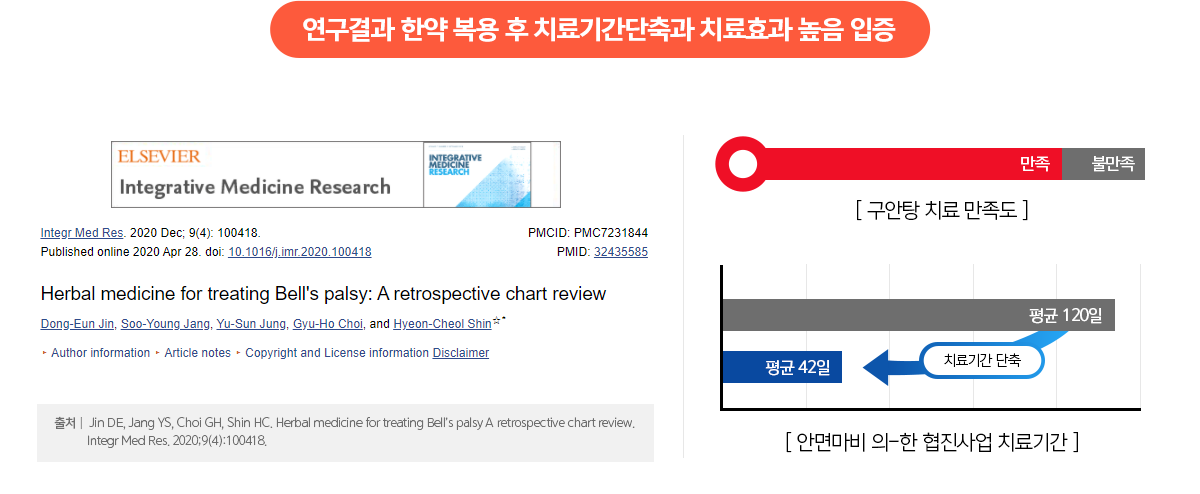
A study of 856 patients with facial palsy admitted to Daegu Haany University Pohang Korean Medicine Hospital from 2004 to 2019 found that,
in facial palsy, patients who received herbal medicine tended to recover faster, with earlier signs of recovery within 3 weeks.
In addition, in the first-phase pilot project to promote collaborative care between conventional and Korean Medicine run by Korea's Ministry of Health and Welfare for one year,
the average total treatment period for 709 facial palsy patients in collaborative care was shortened from 102 days to 42 days.
Adding herbal medicine to conventional treatment or acupuncture showed a tendency toward better outcomes for facial palsy.

Because lowered immunity from overwork or stress is considered a main cause of facial palsy, restoring your energy through sufficient rest is essential.
This herbal prescription is intended to ease pain and support tissue healing in the body.
It is intended to support the body's own healing, help prevent lowered immunity, and regulate the circulation of qi and blood throughout the body.
After examining the cause of facial palsy,
it is a customized herbal medicine prescribed with both your symptoms and your constitution in mind.
It is prescribed in stages according to your progress.
Korean herbal medicine for facial palsy
An herbal prescription intended to support facial nerve recovery
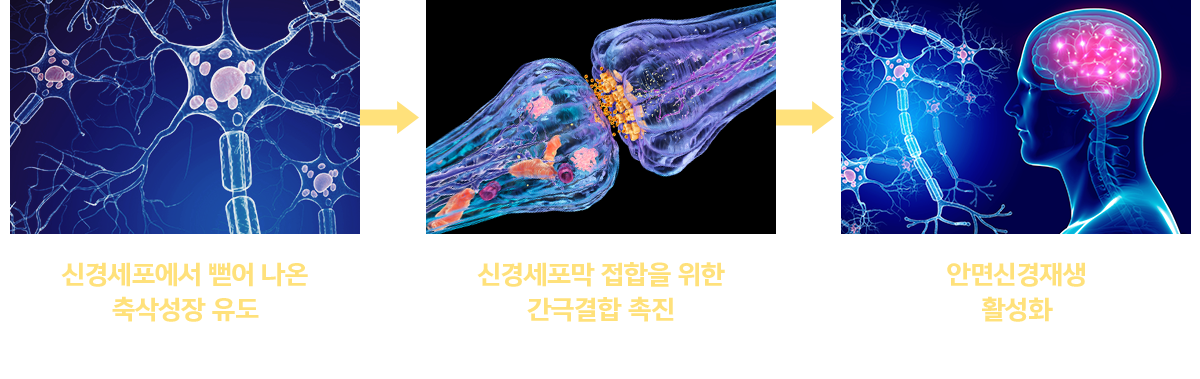
Our herbal prescription for facial palsy was developed from Ebian Korean Medicine Clinic's clinical experience and is intended to support facial nerve recovery.
It is intended to help axons extending from nerve cells grow in the right direction and to support gap junctions so that connections between nerve cells form well.
It is not a short-term medication that only reduces swelling and inflammation of the facial nerve.
Ingredients such as Typhonium tuber (Baekbuja), silkworm (Baekgangjam), Uncaria hook, Clematis root, Notopterygium root, and Saposhnikovia root are used, and the formula is tailored to each patient's condition.
Herbs that support the function of each patient's weaker internal organs are also added to strengthen organ activity at the same time.
This herbal medicine is prescribed after examining the condition of the facial nerve, and responses vary from person to person.
Combined acupuncture for paralyzed facial muscles
Thread-embedding acupuncture
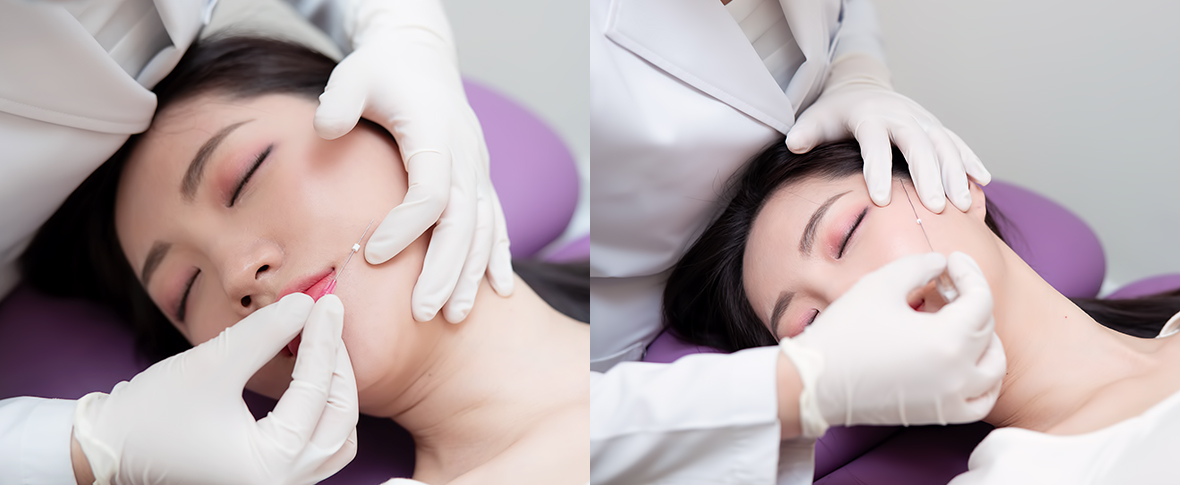
Thread-embedding acupuncture places medical threads in the face to support the facial fascia and the expression and retaining ligaments and help correct uneven facial muscles.
It is also intended to act as a guide so that gap junctions in nerve cell membranes form in the right direction.
Our thread-embedding acupuncture for facial palsy uses three types of thread—deep, fascial, and expression threads.
Because facial palsy symptoms differ from patient to patient, we do not rely on a single type of thread;
threads are combined according to the degree of muscle weakness, paralysis, and abnormal expression.
Combined acupuncture for paralyzed facial muscles
Thread-embedding acupuncture
Thread-embedding acupuncture places medical threads in the face to support the facial fascia and the expression and retaining ligaments and help correct uneven facial muscles.
It is also intended to act as a guide so that gap junctions in nerve cell membranes form in the right direction.
Our thread-embedding acupuncture for facial palsy uses three types of thread—deep, fascial, and expression threads.
Because facial palsy symptoms differ from patient to patient, we do not rely on a single type of thread;
threads are combined according to the degree of muscle weakness, paralysis, and abnormal expression.
Fine facial acupuncture
Fine facial acupuncture
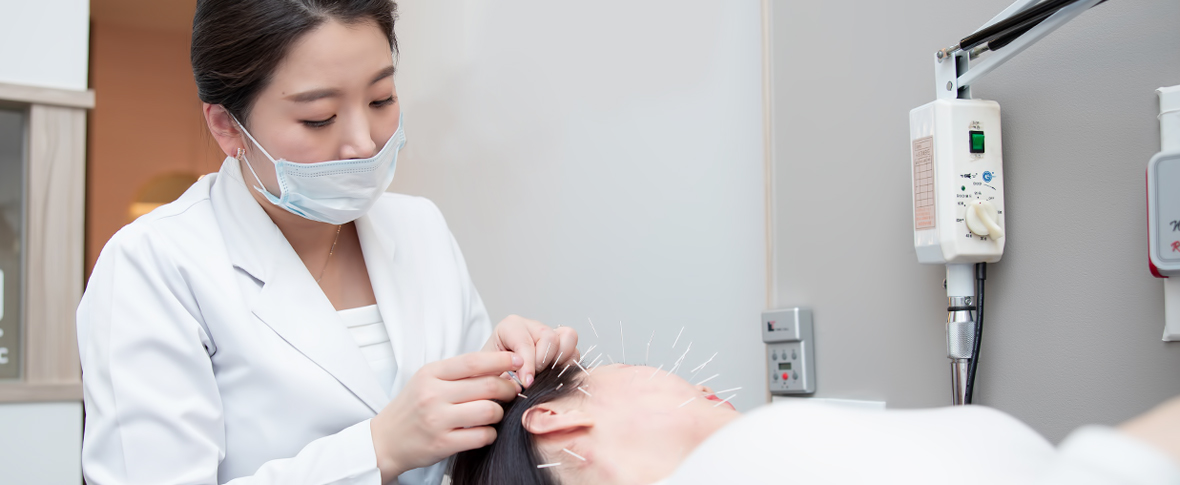
About 100–150 fine needles thinner than a hair are placed on the paralyzed areas of the face.
Fine facial acupuncture is used to help with awkward facial expressions.
After the main facial palsy symptoms are addressed with thread-embedding acupuncture, fine facial acupuncture addresses subtle problems in the small expression muscles
to help you make natural facial expressions.
About 100–150 fine needles thinner than a hair are placed on the paralyzed areas of the face.
Fine facial acupuncture is used to help with awkward facial expressions.
After the main facial palsy symptoms are addressed with thread-embedding acupuncture, fine facial acupuncture addresses subtle problems in the small expression muscles
to help you make natural facial expressions.
Facial nerve pharmacopuncture
Facial nerve pharmacopuncture
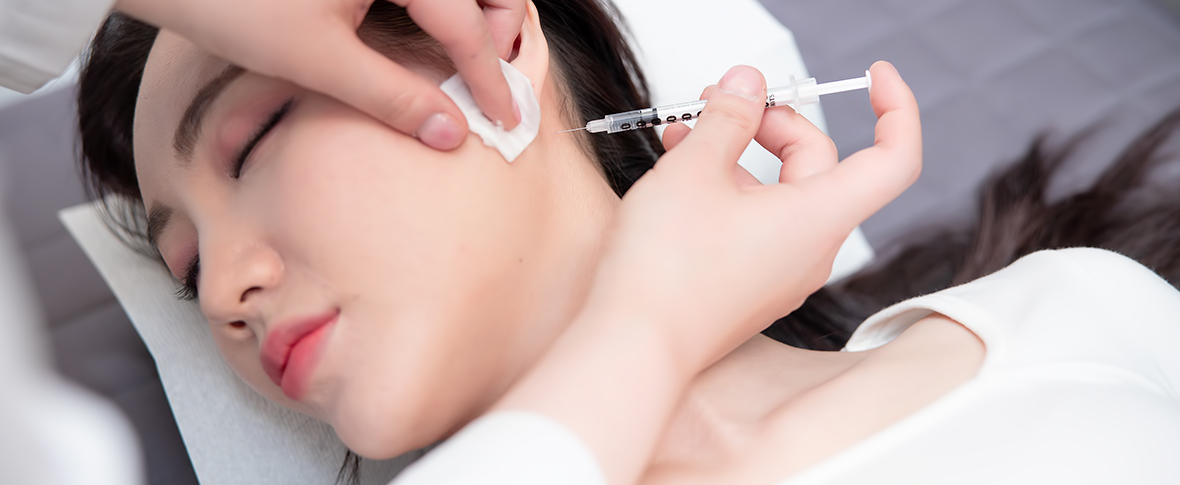
An herbal extract is applied directly at facial nerve acupoints to support the growth of new facial nerve branches from the ends of damaged nerve pathways.
Facial nerve pharmacopuncture includes two types of pharmacopuncture.
One is intended to reduce swelling and inflammation around the damaged facial nerve pathway and support nerve tissue recovery.
The other applies substances extracted from bee venom at facial nerve acupoints (bee venom pharmacopuncture).
An herbal extract is applied directly at facial nerve acupoints to support the growth of new facial nerve branches from the ends of damaged nerve pathways.
Facial nerve pharmacopuncture includes two types of pharmacopuncture.
One is intended to reduce swelling and inflammation around the damaged facial nerve pathway and support nerve tissue recovery.
The other applies substances extracted from bee venom at facial nerve acupoints (bee venom pharmacopuncture).
Facial electroacupuncture
Facial electroacupuncture
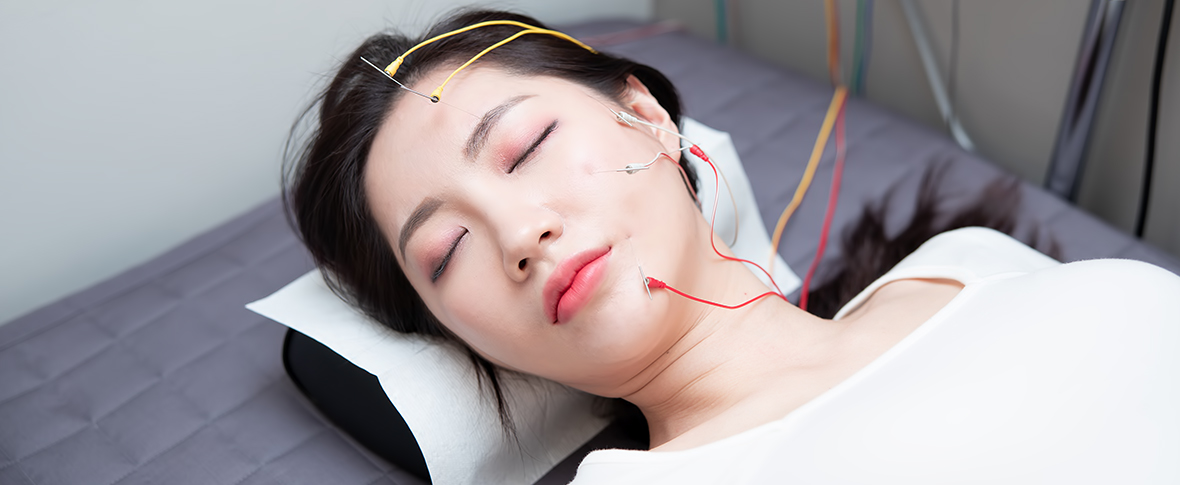
Facial electroacupuncture applies fine electrical stimulation to stiff facial muscles, repeatedly contracting and relaxing them.
Our facial electroacupuncture applies electrical stimulation along the course of the facial nerve pathway.
For peripheral nerve disorders, we combine low-frequency stimulation and look at the condition of the paralyzed muscles.
Facial electroacupuncture applies fine electrical stimulation to stiff facial muscles, repeatedly contracting and relaxing them.
Our facial electroacupuncture applies electrical stimulation along the course of the facial nerve pathway.
For peripheral nerve disorders, we combine low-frequency stimulation and look at the condition of the paralyzed muscles.
Addresses both the peripheral and central nervous systems of the face
Addresses both the peripheral and central nervous systems of the face
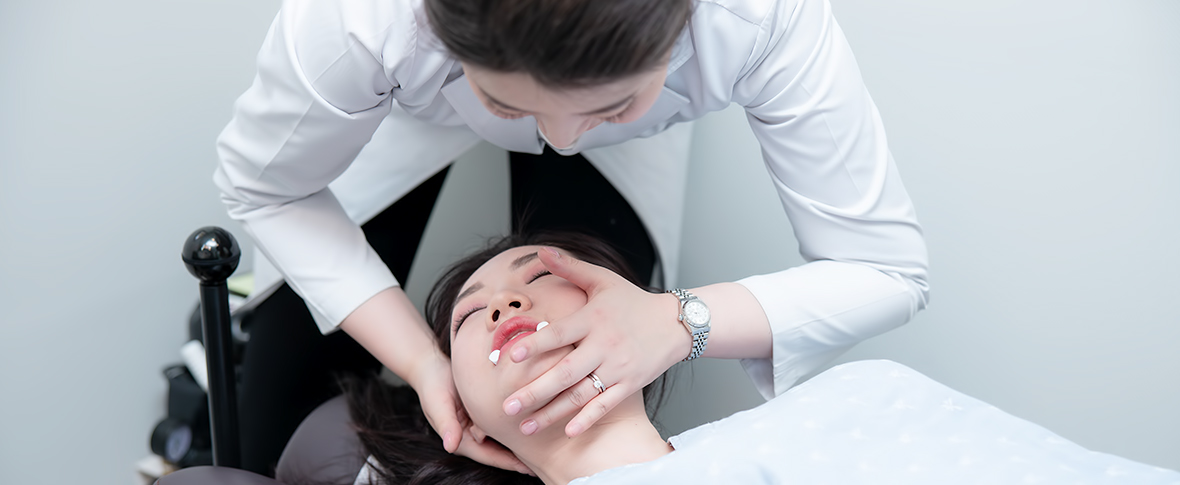
Deep abdominal moxibustion
Deep abdominal moxibustion
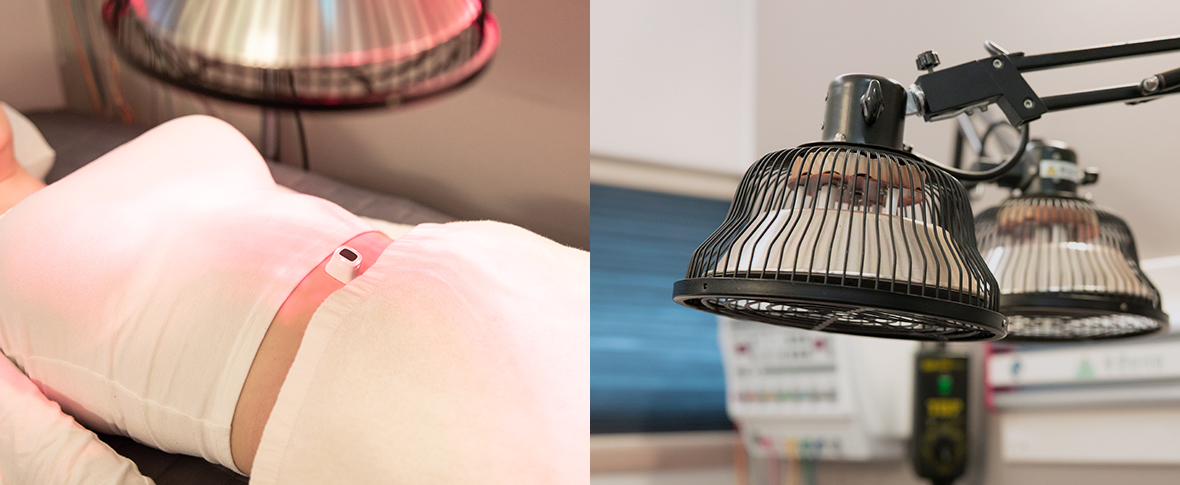
Heat is delivered up to 10 cm beneath the skin of the abdomen to promote the circulation of qi and blood in the internal organs and blood flow to the facial nerve.
Abdominal circulation plays an important role in the body's overall facial nerve signaling,
and moxibustion on acupoints that influence the facial nerve may help when the face feels tingly or has lost sensation.
Heat is delivered up to 10 cm beneath the skin of the abdomen to promote the circulation of qi and blood in the internal organs and blood flow to the facial nerve.
Abdominal circulation plays an important role in the body's overall facial nerve signaling,
and moxibustion on acupoints that influence the facial nerve may help when the face feels tingly or has lost sensation.
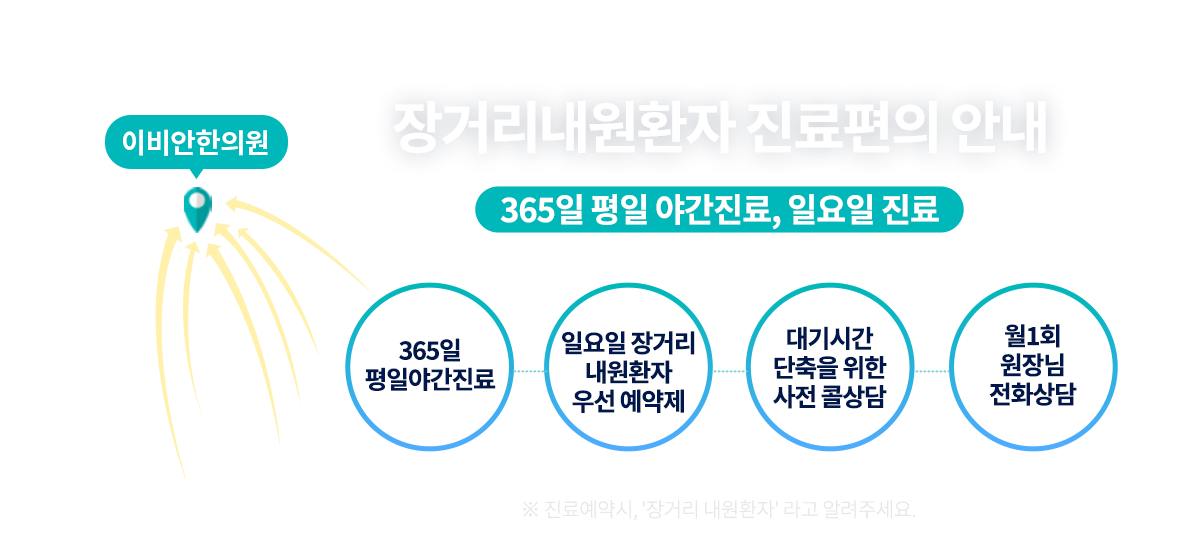
How our integrated facial palsy care began
People with facial palsy look at their paralyzed face in the mirror every day, and their hearts ache.
Many follow what one clinic tells them,
and you can discuss the direction of care while checking your progress during treatment;
otherwise, the early window for treatment is often missed.
Seeing patients who had struggled with lingering effects of facial palsy come to Ebian Korean Medicine Clinic
and continue their care,
we learned that caring for facial palsy requires not a single stopgap method but
an integrated approach to the strengths and weaknesses of the internal organs
and the symptoms of facial paralysis together,
and that this is what matters.
Above all, in the long struggle
with facial palsy, we must comfort patients' hearts and prepare hope together so that they do not give up.
In our facial palsy care, Ebian Korean Medicine Clinic has met many patients with facial palsy. The visible symptoms may look similar, but the causes all differ,
and so do their constitutions.
We plan facial palsy care according to when it began and how severe the paralysis is.
That is why we developed integrated facial palsy care that combines internal and external treatments.
Through this integrated care, we will treat your face with the same care we would give our own.

| Weekdays | 09:00~21:00 |
| Sat · Sun · Public Holidays | 09:00~16:00 |
| Lunch Break | 12:30~14:00 |
| Weekend & Holiday Lunch Break | 12:00~13:00 |
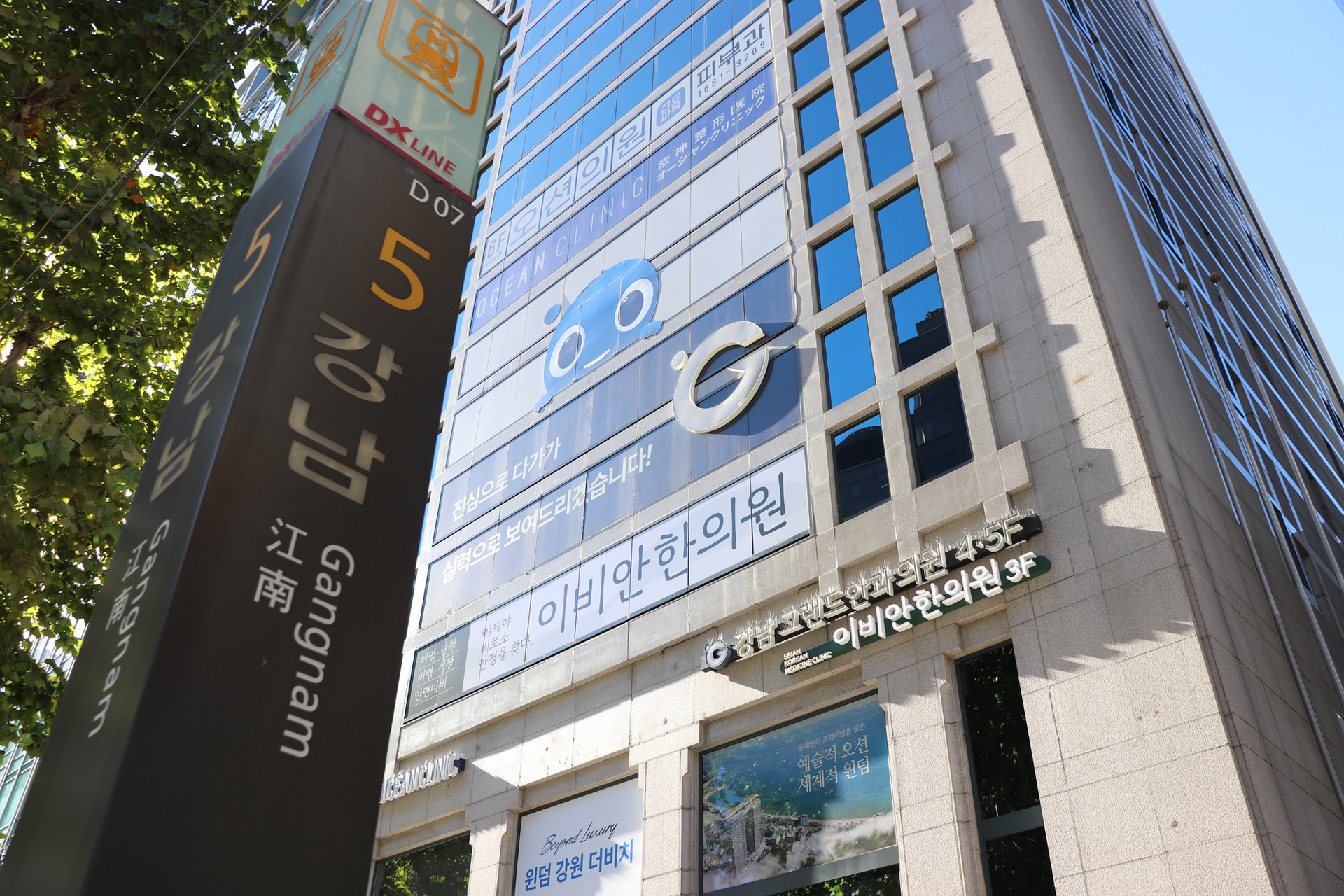
3F, 363 Gangnam-daero, Seocho-gu, Seoul (Seocho-dong)
(Gangnam Station, Exit 5)
Representative: Yeeun Min | Business name: Ebian Korean Medicine Clinic | Business registration no.: 448-92-00624
Main line: +82-2-523-8080 | Fax: +82-2-2651-8089 | Email: purun1888@naver.com
| Weekdays | 9:00~21:00 |
| Sat · Sun · Public Holidays | 09:00~16:00 |
| Lunch Break | 12:30~14:00 |
| Weekend & Holiday Lunch Break | 12:00~13:00 |
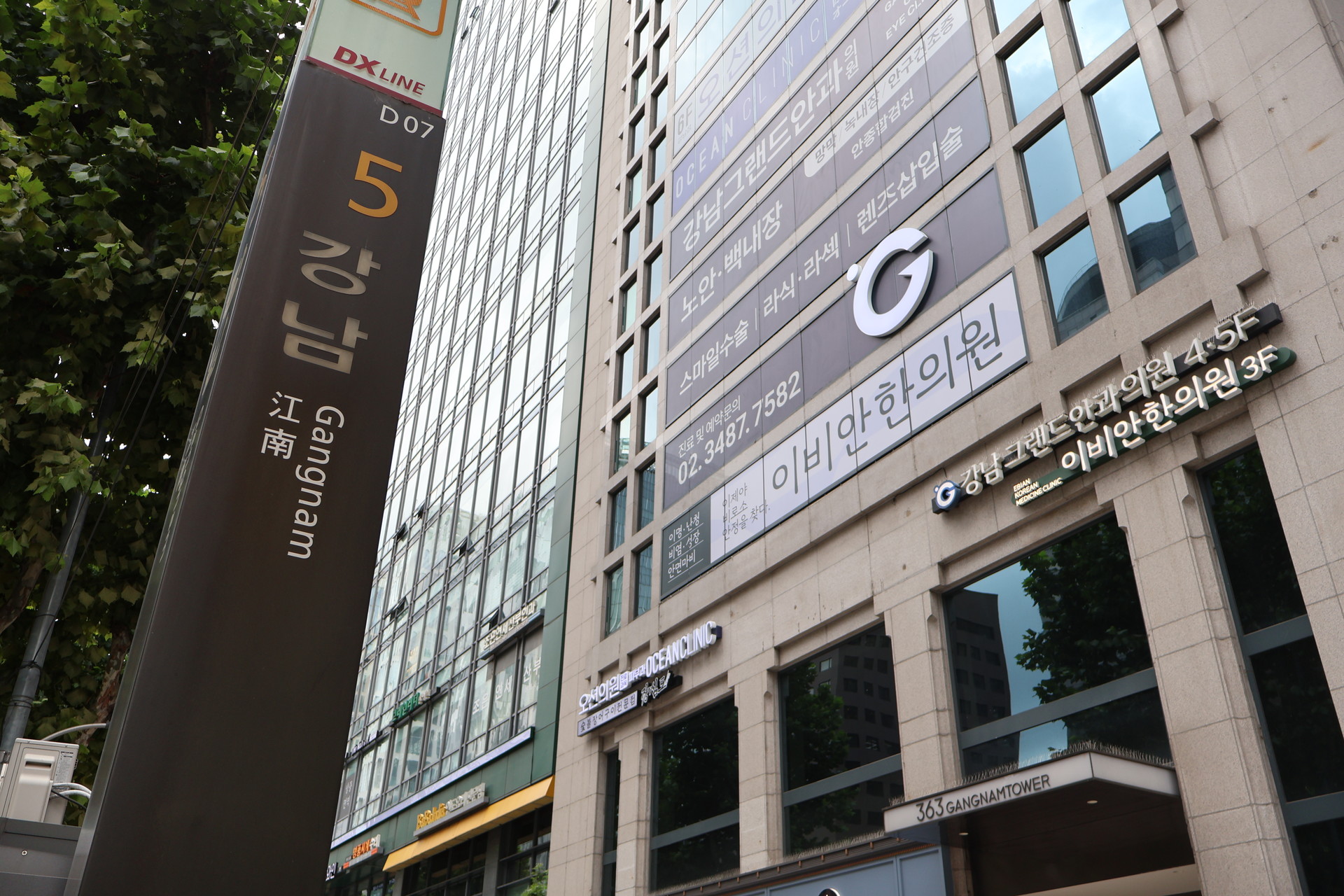
3F, 363 Gangnam-daero, Seocho-gu, Seoul (Seocho-dong) (Gangnam Station, Exit 5)
Representative: Yeeun Min | Business name: Ebian Korean Medicine Clinic | Business registration no.: 448-92-00624
Main line: +82-2-523-8080 | Fax: +82-2-2651-8089 | Email: purun1888@naver.com Copyright ⓒ 2020 Ebian Korean Medicine Clinic All rights reserved.
Copyright ⓒ Ebian Korean Medicine Clinic All rights reserved.
 Book on Naver
 Online Consultation
 KakaoTalk Chat
 Official Blog
 Official YouTube
 Official Instagram